
From Battlefield to Boardroom: How Military Discipline
Discover how military veterans leverage discipline and risk management to excel in funded trading. Learn the key strategies for prop firm success.

Introduction: From Service to Success – The Military Veteran Advantage
Adrian: This military veteran funded trader success story begins like many others. Every week, I receive the same message from former service members. "I'm ex-military. I have discipline. I follow orders. Why can't I pass a prop firm challenge?"
Here's what nobody tells you: your military background is both your greatest asset and your biggest liability in trading.
Today I'm talking to Marcus Chen, a former Marine Corps sergeant who went from blowing three $50K challenges in six months to managing $400K across multiple funded accounts. His transformation demonstrates how military discipline, when properly redirected, creates exceptional traders.
Marcus: Adrian, I was the worst trader you'd ever seen. And I thought I'd be the best.
Adrian: Tell me about day one.
Marcus: Picture this: 2019, fresh out of eight years in the Marines. I'd led convoys through Helmand Province. Managed million-dollar equipment. Made life-or-death decisions under fire.
Trading? How hard could it be?
I had $15,000 saved. Found prop firms through YouTube — the usual "trader makes $50K in one day" videos. Thought, "Finally, something that rewards discipline and execution."
Passed my first challenge in 11 days.
Adrian: That's fast.
Marcus: Too fast. I was trading 5-10 lots on a $50K account. Taking 20 trades a day. My marine brain said: "Overwhelming force wins battles."
The Origin Story: From Uniform to Trading Desk
I lost the funded account in 3 days. Hit max drawdown before my first weekend.
Adrian: What was your mental state?
Marcus: Rage. Pure rage. In the Marines, when you fail, you try harder. Push through. Adapt and overcome, right?
Consequently, I bought another challenge. Then another. Then another.
Six challenges. Six failures. $3,000 in fees. Gone.
Adrian: This is where most people quit.
Marcus: I almost did. However, marines possess an inherent stubbornness that prevents surrender. We just get more tactical.
Started recording every trade. Not the setups — my actual face. Watching myself trade revealed something disturbing about my approach to the markets.
Marcus: A soldier treating the market like an enemy. Every loss was personal. Every winning trade made me cocky. I'd pump my fist after winners like I'd just cleared a building.
The market isn't your enemy. Furthermore, it doesn't care about your service record or combat experience.
Adrian: That's the part most people miss. The market has no opinion about you.
Key points from this phase:
- Lost $3,000 in challenge fees over six attempts
- Treated trading like combat operations
- Failed to separate emotions from market movements
- Recorded trading sessions for self-analysis
The Dark Period: Overcoming Trading Pitfalls
Marcus: Exactly. Nevertheless, everything changed when I met another veteran trader. Air Force guy. He'd been funded for two years. You know what he told me?
"Your military training taught you to attack objectives. Trading is about defending capital."
That flipped my entire approach.
Marcus: Subsequently, I developed what I call the "Guard Duty" system. In the Marines, guard duty is boring. You stand there. You watch. You don't act unless there's a real threat.
99% of market movement isn't a real opportunity. It's just noise.
Went from 20 trades a day to 2-3 trades a week. This dramatic reduction in trading frequency marked the beginning of my transformation from failed trader to consistent performer.
Adrian: That's a massive shift.
Marcus: My win rate went from 45% to 78%. More importantly, my average loss dropped from $500 to $125.
Here's my exact process now:
Morning Brief: Just like military operations. I write a one-page brief before market open:
- What's the mission today?
- What are the no-go zones?
- What's my extraction plan if things go south?
Position Sizing: This is where military precision actually helps. I calculate position size from maximum acceptable loss backwards. Never forward from potential profit.
Through this systematic approach, I transformed my military discipline into trading success.

The Turning Point: Simplifying the Approach
$100K account? Maximum daily loss is $2,000. I won't lose more than $500 per trade. Therefore, that means maximum 4 trades per day, though I rarely take more than one.
The Two-Touch Rule: I only enter if price touches my level twice. First touch is reconnaissance. Second touch with confirmation is entry. This patience-based approach directly contradicts my former aggressive military tactics.
Adrian: What about the psychological side?
Marcus: I treat trading like a deployment. You're not there to be a hero. Instead, you're there to complete the mission and come home safely.
Every funded account is a deployment. Protect the capital, execute the mission, extract profits. This mindset shift represents the core of my military veteran funded trader success story.
Adrian: Let's talk numbers. Where are you now?
Marcus: Four funded accounts:
- $100K with some evaluation-based firms
- $50K with a leading prop firm
- Two $75K accounts with Apex
- Total: $400K under management
Average monthly return: 4-6%. I've withdrawn $47,000 in the last 18 months.
Adrian: From $3,000 in blown challenges to $47,000 in withdrawals.
Marcus: The money isn't even the best part. It's the process. I found peace in trading. No more rage. No more revenge trading.
Moreover, the transformation from aggressive military tactics to patient capital preservation has been profound. This evolution demonstrates how veterans can leverage their discipline while adapting their mindset for market success.
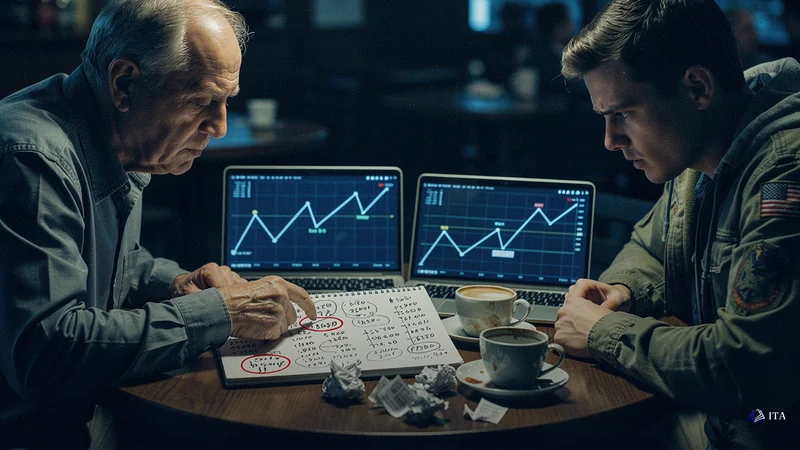
The Current Method: Discipline and Risk Management
Adrian: Rapid fire questions. Ready?
Marcus: Fire away.
Adrian: Biggest mistake veteran traders make?
Marcus: Treating every trade like a combat mission. Most trades should be as boring as guard duty. Additionally, they apply too much force to market situations that require finesse.
Adrian: Best advice for military traders?
Marcus: Your rank means nothing to the market. Start as a private again. Furthermore, embrace the beginner's mindset despite your years of leadership experience.
Adrian: Favorite trading session?
Marcus: London open. 3 AM Eastern. Old habits from deployment schedules. However, this early schedule also provides cleaner price action with less noise.
Adrian: Risk per trade?
Marcus: 0.5% of account. Never more. This conservative approach directly contradicts my former "overwhelming force" mentality.
Adrian: How long before consistent profitability?
Marcus: 14 months of dedicated practice and mindset adjustment. Would've been faster if I'd dropped the ego sooner.
Adrian: One thing you wish you knew earlier?
Marcus: The best traders do nothing 95% of the time. Action isn't always strength. Sometimes, the most powerful decision is to stand down and wait for optimal conditions.

Rapid Fire Q&A: Advice from a Veteran Funded Trader
Marcus: 14 months. Would've been faster if I'd dropped the ego sooner.
Adrian: One thing you wish you knew earlier?
Marcus: The best traders do nothing 95% of the time. Action isn't always strength.
Adrian: Let me be direct: I built ITAfx because I saw too many disciplined people fail at trading. Not because they lacked skill, but because they were applying the wrong framework.
Military veterans have every trait needed for trading success: discipline, risk awareness, ability to follow rules, comfort with uncertainty.
But those traits need recalibration.
In combat, aggression keeps you alive. In trading, aggression kills accounts.
In the military, you're taught to push through failure. In trading, you need to accept small failures to avoid catastrophic ones.
In service, you're part of a unit. In trading, you're alone with your decisions.
Marcus succeeded because he stopped trying to conquer the market and started trying to survive it. That's not weakness — that's evolution.
At ITAfx, we see this transformation regularly. Veterans who come in wanting to "dominate" the market. Six months later, they're the most patient, process-driven traders we fund.
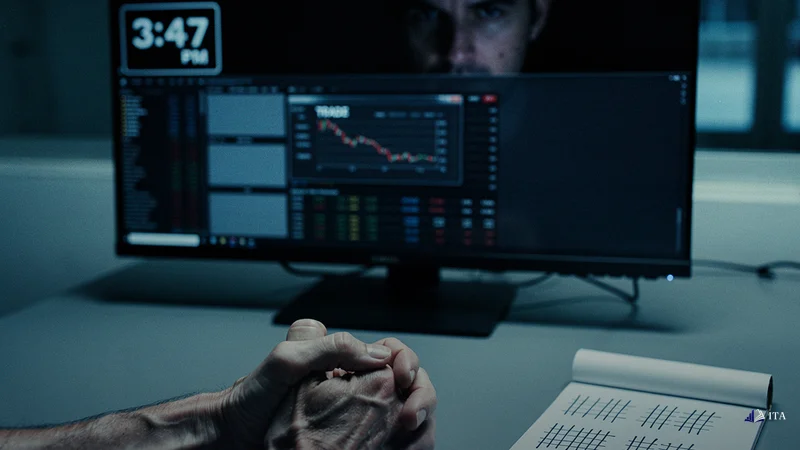
Adrian's Reflection: The ITAfx Perspective
Adrian: Military veterans possess every trait needed for trading success: discipline, risk awareness, ability to follow rules, comfort with uncertainty. However, these traits require careful recalibration for market success.
In combat, aggression keeps you alive. Conversely, in trading, aggression kills accounts. This fundamental difference explains why so many disciplined veterans initially fail at trading.
Marcus succeeded because he stopped trying to conquer the market and started trying to survive it. That's not weakness — that's evolution. His military veteran funded trader success story exemplifies this critical mindset shift.
At ITAfx, we see this transformation regularly:
- Veterans arrive wanting to "dominate" the market
- Six months later, they're our most patient, process-driven traders
- Their military discipline, properly redirected, creates exceptional results
The market doesn't care about your medals. It cares about your method. Marcus will likely reach $1 million in funding by next year — not through aggressive attacks, but through disciplined defense and strategic patience.
Frequently Asked Questions
How do military veterans become funded traders?
Military veterans become funded traders by applying their discipline to prop firm evaluation accounts. The key is adapting military precision to trading: strict risk management, process-driven execution, and treating each trade like a tactical operation. Veterans typically succeed by focusing on capital preservation over aggressive profit-seeking.
What trading strategies work best for prop firm accounts?
The most successful prop firm strategies emphasise risk management over complexity. Simple approaches like breakout trading, support/resistance levels, and trend following work best. Veterans often excel with "guard duty" strategies—waiting for high-probability setups rather than taking multiple trades daily.
How much can a funded trader make per month?
Realistic monthly returns for funded traders range from 4-8% of account value. On a $100,000 funded account, this translates to $4,000-$8,000 monthly profit. Top performers like Marcus Chen average 4-6% monthly across multiple accounts, generating $47,000 in withdrawals over 18 months.
What are the risks of prop firm trading?
The primary risks include losing evaluation fees ($100-$1,000), hitting daily drawdown limits (typically 5%), and account termination for rule violations. Veterans face additional psychological risks: applying combat aggression to markets, revenge trading after losses, and overconfidence from military success translating poorly to trading discipline.
Can trading be a full-time career for veterans?
Trading can become a full-time career for veterans who adapt their military discipline to market realities. Success requires 12-18 months of consistent profitability, multiple funded accounts for income stability, and treating trading as capital preservation rather than conquest. Veterans have structural advantages but need proper recalibration.

Start Your Trading Evaluation
Simulated funded accounts up to $800K. Up to 95% profit split.
Get Funded