
From Logistics to $200K Funded: How Mark Changed Careers in
Discover how Mark, a former logistics manager, transitioned to a $200K funded trader in just 18 months. Learn his risk management secrets and mindset
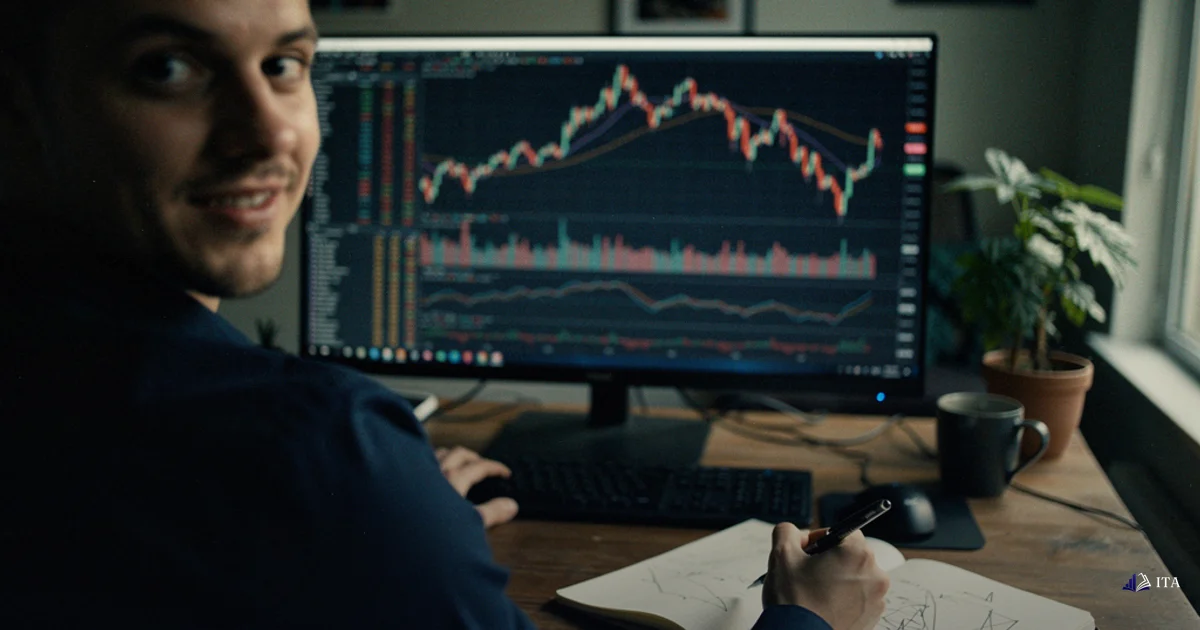
Introduction: Mark's $200K Funded Trading Achievement
Adrian: Mark, you're sitting on $200K in funded accounts. Eighteen months ago, you were managing logistics routes. Most people reading this won't believe that transformation is possible.
Mark: I wouldn't have believed it either. If you'd told me two years ago I'd be trading six figures of funded capital from my home office, I'd have laughed. I was convinced trading was for Oxbridge grads with Bloomberg terminals.
Adrian: Let's start there. What made a 42-year-old logistics manager even consider prop trading?
Mark: Burnout, honestly. Twenty years of 4am starts, managing drivers, dealing with supply chain chaos. The pandemic pushed everything to breaking point. I was making decent money — $65K plus bonuses — but I was miserable. Started watching YouTube videos about trading during lunch breaks. Dangerous rabbit hole.
Adrian: Dangerous how?
Mark: Because it looks so easy on YouTube, doesn't it? Some bloke showing his trading account, drawing lines on charts, talking about "easy" 50-pip moves. I thought, "I manage complex logistics networks, how hard can forex be?"
Adrian: Classic Dunning-Kruger. What happened next?
Mark: Blew my first account in three weeks. $2,000 gone. Told my wife it was "tuition fees." Then opened another account, lost $3,000. Then maxed out a credit card for a $5,000 account because I was "so close to getting it."
Origin Story: From Logistics Manager to Aspiring Trader
Adrian: Here's what nobody tells you: that early destruction phase? It's almost universal. At ITA, we see it in the data — traders who eventually succeed typically blow 2-3 personal accounts first.
Mark: Wish I'd known that. By month six, I was down $10,000, my wife was threatening divorce, and I was sneaking trades on my phone during work meetings. Proper addict behaviour.
Adrian: What was your lowest point?
Mark: Failed three funded challenges in a row. Different firms, same result — blown on day 3 or 4. Always the same pattern: start well, get confident, increase size, hit daily loss limit. The third failure broke something in me.
Adrian: Broke how?
Mark: I did the maths. I'd lost $10,000 of personal money, $1,500 on challenge fees, countless hours. My win rate was decent — around 55% — but my losses were always bigger than my wins. I was literally paying to lose money. Sat in my car after work and properly considered giving up.
Adrian: But you didn't.
Mark: No. My wife — God bless her — sat me down and said something that changed everything. She said, "You're not a trader, you're a gambler. If you want to trade, treat it like you treated logistics. Where's your system? Where's your risk assessment? Where's your bloody spreadsheet?"
The Dark Period: Near Quitting and the Emotional Toll
Adrian: Smart woman. That's exactly the shift. Let me be direct: the difference between funded traders and blown accounts isn't strategy. It's the moment you stop gambling and start operating.
Mark: Exactly. I went back to basics. Built a spreadsheet — not for tracking profits, but for tracking risk. Every trade had to pass a checklist: risk per trade, maximum daily loss, position size calculation. Boring stuff. The stuff that actually matters.
Adrian: Walk me through your risk model now.
Mark: Simple. 0.5% risk per trade on evaluation accounts, 1% on funded accounts. Never more than 2% daily drawdown. If I hit 2% down, laptop closed, go for a walk. Non-negotiable.
Adrian: That's institutional thinking. What about position sizing?
Mark: Everything calculates backwards from maximum acceptable loss. If I'm risking 0.5% on a $100K account, that's $500. If my stop is 20 pips on EURUSD, I can trade 2.5 lots. The maths decides, not my emotions.
Adrian: And your strategy?
Mark: One setup. That's it. Trend continuation on the H1 after London open. I trade EURUSD, GBPUSD, and USDJPY. Maybe 3-5 trades per week. Boring as hell. Consistently profitable.

Turning Point: Treating Trading as a Business
Adrian: That's the part most people miss. Complexity is the enemy of execution. Tell me about your first funded payout.
Mark: Passed a $50K challenge on attempt four — took me 18 days, never exceeded 3% drawdown. First month funded, I took my first payout. When that hit my bank account... mate, I'm not ashamed to say I got emotional.
Adrian: Because it proved the model works.
Mark: Exactly. It wasn't about the money — it was validation. Proof that discipline beats talent. Now I'm running two $100K accounts, consistently pulling 3-5% monthly. Some months less, some months more. But always consistent.
Adrian: Let's do some rapid-fire. Biggest misconception about funded trading?
Mark: That you need to be a genius. You don't. You need to be disciplined.
Adrian: Daily routine?
Mark: 6:30am — review economic calendar. 7:00am — mark up charts. 8:00am London open — watch for setups. Usually done by 11am.

Current Method: Consistent Gains with Strict Risk Management
Adrian: Worst habit you've broken?
Mark: Revenge trading. If I lose, I wait 24 hours before taking another trade. Cooling-off period.
Adrian: Best advice for someone starting out?
Mark: Your job isn't to make money. Your job is to not lose money. The profits come when you master that.
Adrian: Win rate versus risk-reward?
Mark: 52% win rate, 1:1.5 average RR. Nothing spectacular. Just consistent.
Adrian: If you could go back two years?
Mark: Start with risk management, not strategy. Would've saved me $10,000 and a near-divorce.

Rapid Fire Q&A with Mark
Adrian: I built ITAfx because I saw too many talented traders fail due to poor risk management. Your story proves the point — talent without discipline equals failure. Discipline without talent can still succeed.
Mark: That's it exactly. I'm not the smartest trader. I'm definitely not the most talented. But I show up, follow my rules, and manage risk like my life depends on it. Because financially, it does.
Adrian: Last question — what's next for you?
Mark: Scaling slowly. Maybe add another $100K allocation next year. But no rush. This isn't a sprint. My goal is to be trading in 10 years, not to make a million in 10 months.
Adrian: That's institutional thinking.
Mark: Exactly. The irony is, by aiming for less, I'm achieving more than I ever did when chasing home runs.
Adrian's Reflection: The Mindset Shift That Matters Most
Adrian: Here's what separates Mark from the 90% who fail: he learned that funded trading isn't about finding the perfect strategy. It's about building a business system that protects you from your worst impulses. Most traders optimise for profits. The successful ones optimise for survival.
The uncomfortable truth? Your strategy is probably fine. Your risk management is probably killing you. Mark's transformation didn't happen when he found a better indicator or a secret pattern. It happened when he started calculating position sizes from a spreadsheet instead of his gut.
That's why at ITA, we hammer this point home: institutional traders don't chase 100% months. They compound 3-5% monthly returns because they understand a simple truth — you can't compound from zero.
Mark nearly quit three times. Maxed out credit cards. Almost lost his marriage. Today, he's pulling consistent profits from $200K in funded accounts. The difference wasn't talent or luck or market conditions.
The difference was a spreadsheet and the discipline to use it.
Frequently Asked Questions
How realistic is it to change careers and become a full-time funded trader in 1–2 years?
Career change to funded trading typically takes 18-24 months with disciplined approach. Most successful transitions involve 2-3 blown personal accounts, multiple challenge failures, then systematic risk management adoption. According to prop firm data, traders who eventually succeed average 6-8 challenge attempts before getting funded consistently.
What does a typical day look like for a successful funded trader who left a traditional job?
Successful career-change traders maintain structured schedules: 6:30am economic calendar review, 7:00am chart markup, 8:00am London open trading window. Most complete trading by 11am, focusing on 3-5 high-probability setups weekly rather than constant screen time. Discipline beats hours.
What are the most common mistakes career changers make when pursuing funded trading?
Career changers typically fail by treating trading like gambling rather than business operations. Common errors include oversized positions, revenge trading after losses, and chasing profits instead of managing risk. The shift happens when they apply professional discipline to position sizing and risk calculations.
How do funded traders manage risk differently from retail beginners?
Funded traders calculate position sizes from spreadsheets, not emotions. They risk 0.5-1% per trade maximum, set daily loss limits at 2-3%, and close laptops when limits hit. Risk management determines trade size before strategy selection. This systematic approach protects funded capital consistently.
What kind of income can a consistent funded trader realistically expect from a $50K–$200K account?
Realistic monthly returns range 3-5% for consistent funded traders managing $50K-$200K accounts. This translates to $1,500-$10,000 monthly with 70-90% profit splits. Top performers focus on capital preservation over home runs, compounding modest gains rather than chasing spectacular returns.

Start Your Trading Evaluation
Simulated funded accounts up to $800K. Up to 95% profit split.
Get Funded