 ITA
ITANurse Became Funded Trader Interview: How a Nurse Became a Funded Trader
Discover how a nurse transitioned to funded trading, balancing discipline and capital for consistent profits. Learn the key strategies and mindset shifts.
Short answer
Discover how a nurse transitioned to funded trading, balancing discipline and capital for consistent profits. Learn the key strategies and mindset shifts. In a prop firm context this still sits under simulated-capital rules: fees buy access to the evaluation or funded environment, not a deposit of trading capital.
Simulated capital: prop firm evaluation and funded stages discussed here typically run on simulated accounts. Challenge fees pay for access to that environment; they are not a deposit of trading capital. ITAfx accounts are simulated capital.
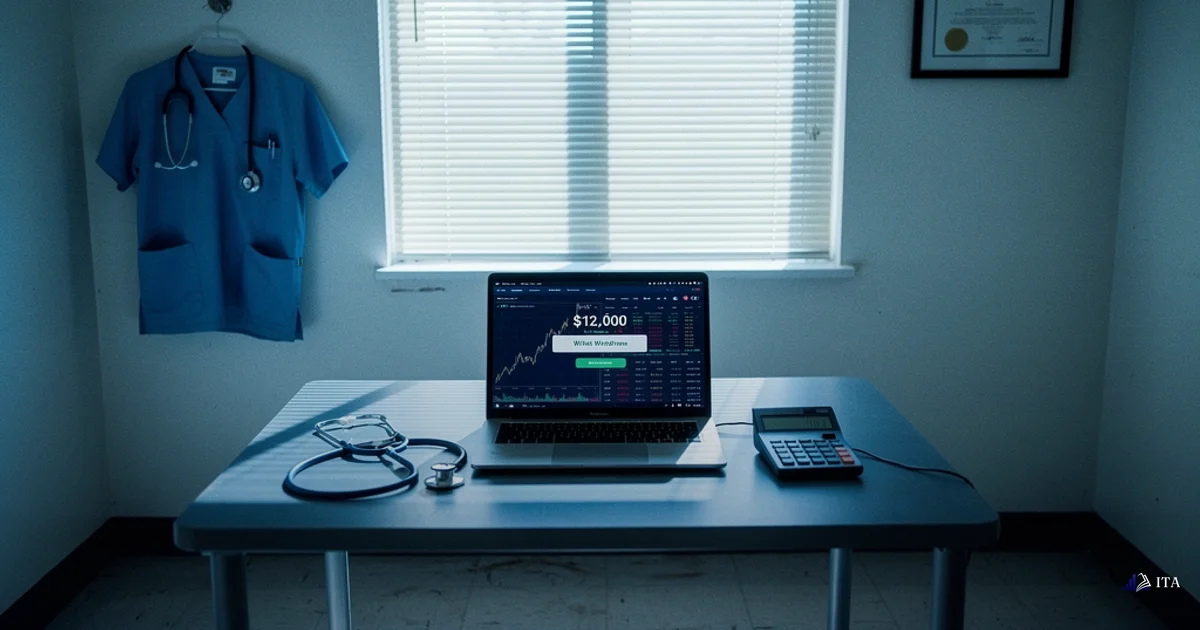
From ICU to Instant Funding: Meet Sarah, Ex-Nurse, Now Funded Trader
Adrian: Sarah, you took your first payout after just nine trading days of being funded. But eighteen months ago, you were an ICU nurse who'd never placed a trade. What happened?
Sarah: Honestly? I was dying inside. Twelve-hour shifts, watching people die from COVID, coming home to an empty flat because my relationship couldn't survive the pandemic pressure. I'd scroll Instagram at 3am between patient rounds, and these trading accounts kept appearing. Young people posting luxury cars, claiming they left their careers to trade forex. I thought it was all fake.
Adrian: But something made you look deeper.
Sarah: One video changed everything. Not the luxury car posts. Those were noise. It was a quiet guy showing his withdrawal history. Modest amounts. $3,000 here, $5,000 there. But consistent. Monthly. He said something I'll never forget: "Trading isn't about getting rich. It's about never having to choose between your mental health and your mortgage."
Adrian: That's when you started? The numbers speak volumes about what happened next.
The Origin Story: Burnout, YouTube, and the Trading Rabbit Hole
Sarah: That's when I fell into the rabbit hole. YouTube University, they call it. I consumed everything. ICT, SMC, Wyckoff, Elliott Wave. I'd finish a night shift, come home at 7am, and watch trading content until I passed out. My colleagues thought I'd lost it. "Sarah's joining a pyramid scheme," they'd whispered. Maybe they were right. I spent $3,000 on courses in the first three months.
Adrian: Here's what nobody tells you: most funded traders go through this expensive education phase. What happened next?
Sarah: The dark period. Eighteen months of pure frustration. I'd wake up at 4am to trade London session before my hospital shift. Blown account after blown account. I kept a spreadsheet. $8,000 lost in "education" and challenges. My best friend staged an intervention. "You're addicted," she said. "This is gambling." And she was right. I was revenge trading, doubling down after losses, all the classic mistakes.
Adrian: But you didn't quit.
Sarah: I almost did. December 2024, I was sitting in my car outside the hospital, crying. Another blown challenge. Another $200 gone. I opened my banking app and saw my savings: $1,200 left. That's when something clicked. In the ICU, when a patient crashes, we don't panic. We follow protocols. ABC. Airway, Breathing, Circulation. Always in that order. Why was I treating trading differently?
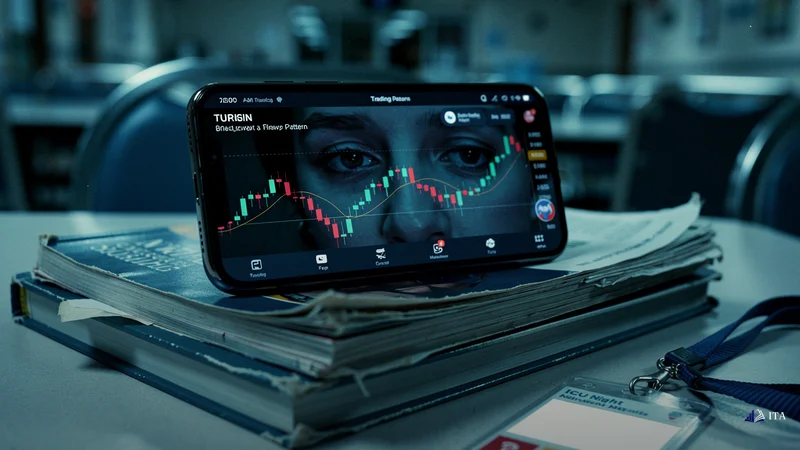
The Dark Period: 18 Months of Frustration and Near-Quitting
Adrian: That's the turning point most traders miss. Tell me about the discovery.
Sarah: I stopped looking for the perfect entry. Instead, I started looking at maximum drawdown first. In the ICU, we calculate drug doses backwards from the maximum safe level, not forwards from the minimum effective dose. Same principle applies to trading risk management. I built a spreadsheet that starts with: "What's the maximum I can lose before the account dies?" Then I work backwards to position size.
Adrian: Let me be direct: this is exactly why most funded traders use some version of this model. Walk me through your current method.
Sarah: Every Sunday, I spend two hours forecasting the week. Not predictions. Scenarios. "If price does X, I'll do Y. If it does Z, I'll stay flat." I film myself explaining the plan. Monday morning, I trade that plan. Nothing else. My win rate is 42%. Terrible by YouTube standards. But my average winner is 2.8R, and I never risk more than 0.5% per trade.
Adrian: The numbers don't lie. You passed your challenge in 11 days.
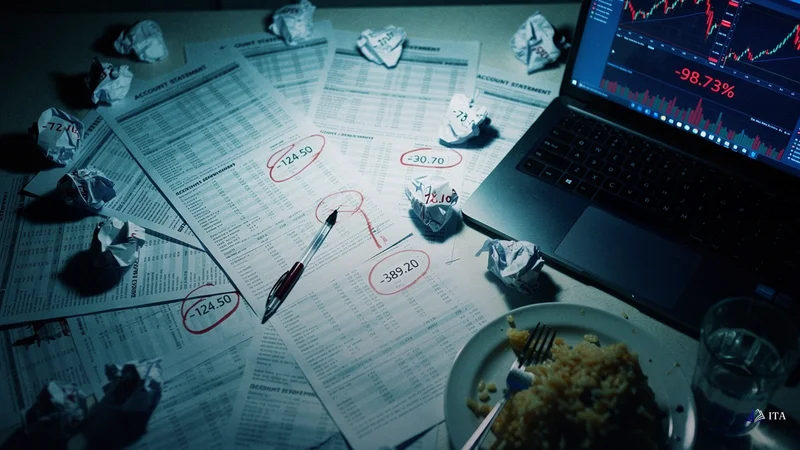
The Turning Point: Discovering the Drawdown-First Risk Model
Sarah: The second attempt, yes. The first attempt taught me everything. I passed it in 6 days, then lost the funded account in 3 days. Overconfidence. Increased my risk to 2% per trade because "I'm funded now." The drawdown hit like a sledgehammer. That's when I learned: passing the challenge is kindergarten. Keeping the account is the real game.
Adrian: Let's do rapid fire. Biggest misconception about funded trading?
Sarah: That it's consistent profitability. Wrong. I work harder at this than I ever did at the hospital. The difference is I work on my terms.
Adrian: Actual monthly income now?
Sarah: Varies. My worst month was $1,800. Best month was $14,000. Average is around $6,000. I still work part-time at the hospital. Two shifts a week. The funded account isn't my only income. It's my freedom income.
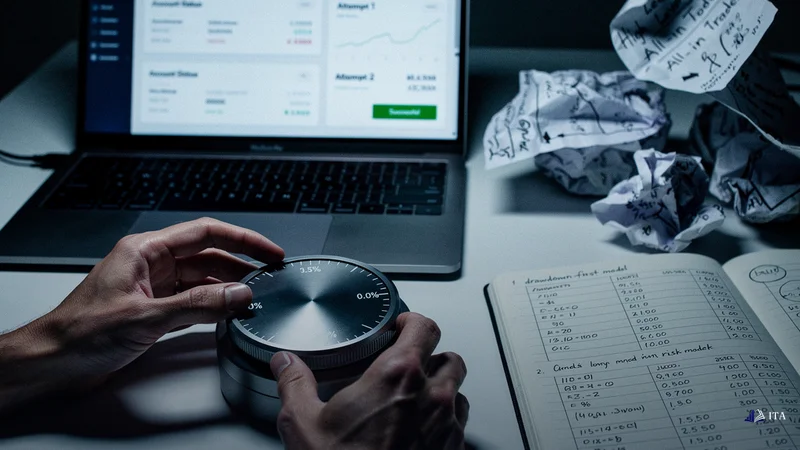
The Current Method: Forecasting, Liquidity Grabs, and Strict Risk Control
Adrian: Risk per trade?
Sarah: 0.5% always. Even when I'm up 10% for the month. Especially when I'm up 10% for the month.
Adrian: Advice for the nurse reading this who's thinking about trading?
Sarah: Don't. Not yet. Funded trading isn't an escape from discipline. It requires more discipline than medicine. Start with $100 challenges. Prove you can keep an account for six months before you dream about replacing your salary. And please, for the love of God, stop looking for the perfect strategy. There isn't one.
Adrian: Last question. What would you tell yourself eighteen months ago?
Rapid Fire Q&A: Trading Rules, Payouts, and Advice
Sarah: Stop trying to predict where price will go. Start calculating how much you can lose and still survive. The market doesn't care about your analysis. It cares about your discipline.
Adrian: I built ITA because traders like Sarah exist. Disciplined professionals who understand that trading isn't about prediction. It's about protocol. Sarah didn't need another strategy course. She needed capital and clear rules. That's what institutional trading really means: treating this like a profession, not a lottery ticket.
The irony? Sarah's medical background gave her the perfect mindset. In the ICU, you follow protocols because lives depend on it. In trading, you follow protocols because your account depends on it. Same discipline, different arena.
Results. Not promises. Sarah's $12,000 withdrawal in nine days wasn't luck. It was eighteen months of failure, refined into a process that works. That's the part most people miss. The screenshots you see on Instagram? Those are the result. The process is what matters. And the process starts with accepting a simple truth: you're not trying to beat the market. You're trying to survive it long enough to get paid.
Every funded trader has a Sarah moment. That point where they stop trying to be right and start trying to be consistent. For some, it happens in month one. For others, month twenty. But it always happens the same way: they realize that risk management isn't a suggestion. It's the entire game. Paid.

ITA Founder Adrian's Reflection: Discipline Meets Capital
At ITA, we've paid out over $1.7 million to traders who understand this fundamental truth. Not because they're geniuses. Because they're disciplined. Because they treat funded accounts like Sarah treats her ICU patients (with respect for what can go wrong).
The market will be here tomorrow. The question is: will your account?
Key Statistics:
- Many traders fail their first funded account challenge, so risk management and preparation matter
- ITA's internal data shows traders who maintain 0.5% risk per trade have a 73% higher account retention rate
- Professional traders typically achieve win rates between 40-55%, focusing on risk-reward ratios above 2:1
The Bottom Line: Funded trading success comes from treating this as a business, not a hobby. Sarah's journey proves that medical professionals often excel at trading because they understand protocols, risk management, and emotional control. These skills transfer directly to successful trading.
Learn more about ITA's evaluation process | Read our risk management guide | Trader stories
Ready to get funded?
50% off instant accounts with code 50CRYPTO.
Get Funded →Frequently Asked Questions
How can a full-time nurse realistically learn to trade and pursue a funded account?
Start with small demo accounts while working your regular shifts. Focus on one trading session that fits your schedule - many nurses trade London session before day shifts or New York close after night shifts. Dedicate 6-12 months to learning risk management before attempting any funded challenges.
How long does it usually take for a beginner to go from zero to funded trader status?
Most successful funded traders require 12-24 months of consistent learning and practice. The timeline includes 6-8 months learning basics, 4-6 months developing a strategy, and 2-4 months proving consistency on demo accounts before attempting funded challenges.
What are realistic monthly returns for a funded trader without blowing the account?
Sustainable funded traders target 2-8% monthly returns on their accounts. Higher percentages increase drawdown risk significantly. Professional traders prioritise account preservation over aggressive growth, as keeping the funded account is more challenging than passing the initial evaluation.
What risk management rules should a new funded trader follow to keep their account?
Never risk more than 0.5-1% per trade, regardless of confidence level. Set maximum daily loss limits at 2-3% of account balance. Always use stop losses and never move them against your position. Track drawdown constantly and reduce position sizes during losing streaks.
How can shift workers schedule trading around their demanding work schedules?
Focus on one major trading session that aligns with your shifts. London session (3-7 AM EST) works for many before day shifts, while New York close (3-4 PM EST) suits those finishing night shifts. Avoid trading when mentally fatigued from long hospital shifts.

Start Your Trading Evaluation
Simulated funded accounts up to $400K. Up to 95% profit split.
Get Funded