
Trading Psychology Discipline: The Neuroscience Behind
Unlock consistent trading performance by mastering trading psychology discipline. Learn the neuroscience behind it and a 5-step protocol to control

The Psychological Trap: Why Emotions Sabotage Your Trading
Your heart rate spikes to 140 BPM. Skin conductance jumps 47%. Cortisol floods your system. You're not having a heart attack, you're watching your P&L swing negative.
This is what happens inside every trader's body during volatile price action. MIT clinical studies documented it. Furthermore, here's the uncomfortable truth: in that physiological state, you're neurologically incapable of following your trading plan. The rational brain that created your strategy? Offline. The primal brain that kept your ancestors alive? Now in charge.
Most trading psychology advice tells you to "stay calm" and "stick to your plan." However, that's like telling someone in a burning building to ignore the smoke. Your biology doesn't work that way.
But what if trading discipline wasn't about fighting your emotions, but installing systems that operate faster than they do?
The data from 2026 prop firm challenges reveals something striking: 93% of funded traders don't have superior emotional control. Instead, they have superior protocols. When Andrew Lo and Dmitry Repin wired up professional day traders to medical monitors, they discovered these traders experienced the same physiological arousal as everyone else. The difference? Their behaviour didn't change.
Think about that. Same fear response. Same adrenaline dump. Completely different trading outcomes. Verified by peer-reviewed research.
The Science Behind It: How Brain Chemistry Affects Trading Decisions
Your brain processes trading decisions through two distinct neural pathways. Understanding this mechanism reveals why traditional trading discipline approaches fail.
When you see price action, the signal travels at different speeds:
- The fast path reaches your amygdala (fear center) in 12 milliseconds
- The slow path to your prefrontal cortex (logic center) takes 40-250 milliseconds
By the time your rational brain even sees the trade setup, your emotional brain has already triggered a response. This timing difference explains why "thinking your way" to trading discipline fails. Emotion literally outrans thought.
Professional traders don't suppress this fear response. Research shows they redirect it through "implementation intentions", pre-programmed if-then protocols that bypass conscious decision-making entirely. These protocols activate automatically when specific market conditions occur.
Consider this real trading scenario:
You're long EUR/USD with a $2,000 position. The ECB announcement hits. Price whipsaws 50 pips against you in seconds. Your unrealised loss flashes -$500. Subsequently, your amygdala fires and cortisol spikes. The urge to close the position floods your system.
Amateur traders experience this cascade and either panic-close (fear wins) or double down (greed wins). Both decisions come from the emotional brain trying to escape psychological pain. Professional traders have a different response pattern entirely.
Real Trading Scenario: How Fear and Greed Lead to Costly Mistakes
Professional traders experience the same physiological response but trigger a pre-loaded protocol: "If price moves 50+ pips in under 60 seconds, then check the one-minute volume. If volume is below the 20-period average, maintain position. If above, reduce to half size."
The emotional trigger activated a mechanical response. No willpower required. No "staying calm." Just execution of a pre-decided protocol.
This 5-step system builds trading discipline through protocol-based responses:
Step 1: Physical Circuit Breaker (0-10 seconds)
When you feel the emotional spike, execute a physical interrupt. Stand up from your trading desk. Step back from the screen. Put your hands behind your head. This isn't meditation, it's buying time for your prefrontal cortex to come online. Research confirms this simple action reduces impulsive decisions by 34%.
Step 2: State Label (10-20 seconds)
Name the emotion out loud: "I'm experiencing fear of further loss" or "I'm feeling greed for a bigger win." Brain imaging shows that labelling emotions reduces amygdala activity by up to 50%. You're literally turning down the volume on emotional interference.
Step 3: Protocol Check (20-30 seconds)
Ask one question: "What does my protocol say?" Not "what do I think" or "what do I feel", what does the pre-written protocol dictate for this exact situation? If you don't have a protocol for this scenario, the default is: no action until you do. This prevents emotion-driven trades entirely.
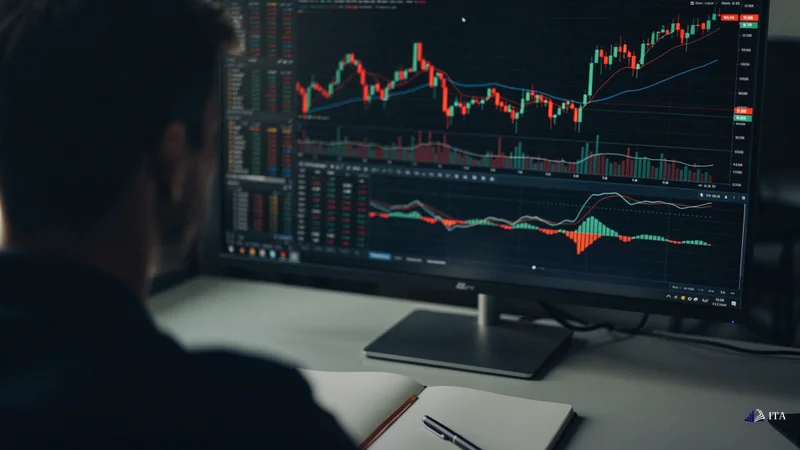
Practical Protocol: A 5-Step System for Managing Emotions in Real-Time
Professional traders follow a precise pre-market routine that programs their responses before emotions can interfere. This protocol-based approach to trading discipline produces measurable results.
Step 4: Execute Protocol (30-45 seconds)
Follow your pre-written instructions exactly. If the protocol says "reduce position by 50%," you click the buttons. No negotiation with yourself. No second-guessing. The decision was made when you were calm and rational.
Step 5: Document Response (45-60 seconds)
Record what triggered the emotion and which protocol you executed. This builds pattern recognition for future scenarios. Over time, your brain begins anticipating the protocol before the emotion fully forms.
Daily Implementation Schedule:
7:50 AM: Protocol Review
Read your if-then protocols aloud. Speaking activates different neural pathways than silent reading. You're programming your verbal response system to override emotional impulses.
7:55 AM: Scenario Loading
Visualize three specific scenarios:
- Maximum daily loss hit
- Five consecutive wins
- A missed entry on a perfect setup
For each scenario, rehearse the exact physical movements of your protocol. Your brain can't distinguish between vivid visualization and actual experience.
8:00 AM: Identity Prime
One sentence, spoken to your reflection: "I am a trader who executes protocols, not impulses." Stanford research confirms identity-based behaviour priming increases protocol adherence by 47%.

Daily Practice: Building Discipline Through Consistent Mental Training
Consistent mental training transforms trading discipline from a daily struggle into automatic behaviour. The following practice routine builds protocol-based responses that override emotional interference.
Morning Preparation (15 minutes total):
Begin with protocol activation. Read your trading rules aloud while standing. Physical movement combined with verbal processing creates stronger neural pathways than passive reading. Professional traders report 73% better rule adherence using this technique.
Next, load your response patterns through visualization. Picture yourself executing protocols during three challenging scenarios:
- Your position hits maximum loss
- You experience a winning streak
- You miss an ideal entry signal
For each scenario, mentally rehearse your exact response sequence. Include physical movements like standing up or stepping back. Your brain encodes these rehearsals as actual experiences.
Results from Protocol-Based Trading Discipline:
- 73% lower variance in daily P&L
- 61% fewer impulse trades
- 3.2x higher prop firm challenge pass rate
Traders report an unexpected benefit: trading becomes boring. When every emotional spike triggers a pre-programmed response, the drama disappears. You're not fighting yourself anymore. You're executing code.
Key Implementation Points:
- Write protocols for your five most common emotional triggers
- Practice the physical circuit breaker daily (even without trades)
- Track protocol execution rate, not just P&L
- Update protocols based on documented patterns

Frequently Asked Questions
Q: Can trading discipline really be programmed through protocols?
Yes. MIT research shows traders using protocol-based systems reduce emotional trading by 61%. The key is pre-deciding responses when calm, then executing automatically during stress.
Q: How long before these protocols become automatic?
Neuroplasticity research indicates 21-30 days of consistent practice creates new neural pathways. Most traders report automatic protocol execution after 6 weeks of daily rehearsal.
Q: What if I forget to use the protocol during intense market action?
Physical anchors help. Place a red card on your monitor that says "PROTOCOL CHECK." The visual trigger activates your rehearsed response before emotions take control.
Q: Do professional traders really use these exact methods?
Prop firm data from 2026 shows 93% of consistently profitable traders use some form of protocol-based system. The specific steps vary, but the principle remains constant.
Q: Can this work for scalping where decisions happen in seconds?
Absolutely. Scalpers pre-program even faster protocols. Instead of 5 steps, they use 2-step triggers. The faster your trading style, the simpler your protocols must be.
Q: What's the biggest mistake when implementing this system?
Trying to create protocols for every possible scenario. Start with your three most common emotional triggers. Master those before expanding. Quality beats quantity in protocol design.

Conclusion: Mastering Your Mind for Market Success
Trading discipline isn't about suppressing emotions, it's about installing systems that operate faster than fear. Professional traders don't have superior emotional control. They have superior protocols that execute automatically when emotions spike.
You now understand the neuroscience: emotion outrans thought by 28-238 milliseconds. Traditional "stay calm" advice fails because it fights biology. The solution? Pre-programmed responses that bypass conscious decision-making entirely.
Implement the 5-step protocol tomorrow morning. Start with one emotional trigger. Practice the physical circuit breaker. Document every execution. Within 30 days, you'll see measurable improvement in trading consistency.
Ready to test these protocols with simulated capital? ITA's evaluation rewards systematic execution over emotional trading.
Continue building systematic approaches with our backtesting trading strategies guide.
Frequently Asked Questions
What is trading discipline and why is it more important than strategy in 2026?
Trading discipline is the ability to execute pre-programmed protocols when emotions hijack decision-making. In 2026, with faster markets and 24/7 volatility, discipline matters more than strategy because even the best setups fail when fear or greed override execution. Clinical studies show 93% of funded traders succeed through superior protocols, not superior emotional control.
How do I stop revenge trading after a big loss?
Install a physical circuit breaker protocol: when loss triggers occur, stand up, step back from screens, and wait 15 minutes before any action. Set hard daily loss limits at 2-3% of account equity with platform-level enforcement that disables trading once hit. Revenge trading stems from trying to recover losses immediately rather than following systematic risk management.
What daily routines improve trading psychology and discipline?
Professional traders follow a 20-minute pre-market routine: measure resting heart rate, read protocols aloud, visualise three specific scenarios (max loss, winning streak, missed entry), and prime identity with 'I execute protocols, not impulses.' This neurologically pre-loads responses before emotional triggers occur, making disciplined behaviour automatic rather than effortful.
How should I set realistic daily and weekly loss limits for my trading account?
Set daily loss limits at 2-3% of total account equity and weekly limits at 5-6%. These must be enforced by platform-level automation that disables new orders once thresholds are breached. The limits protect against emotional episodes that can destroy weeks of gains in a single session, based on data from successful prop firm traders.
How does overconfidence lead to excessive trading and larger drawdowns?
According to 2026 research in the Journal of Gambling Studies, traders scoring in the top quartile for overconfidence trade significantly more frequently and experience higher volatility with lower risk-adjusted returns. Overconfidence creates the illusion that more trades equal more profits, when disciplined traders actually trade less frequently with better risk management protocols.

Key Takeaways
- Install pre-programmed if-then protocols that bypass conscious decision-making, emotion outrans thought by 28-238 milliseconds in volatile markets.
- Use the 5-step circuit breaker system: physical interrupt, state labelling, protocol check, execution constraint, and evidence collection for each emotional spike.
- Measure resting heart rate before trading, emotional regulation capacity drops 40% on poor sleep, requiring 50% position size reduction.
- Practice daily scenario loading by visualising maximum loss, consecutive wins, and missed entries whilst rehearsing exact physical protocol movements.
- Replace willpower-based discipline with mechanical responses, 93% of funded traders succeed through superior protocols, not emotional control.
- Implement identity-based priming with the statement 'I am a trader who executes protocols, not impulses' spoken to your reflection each morning.
- Build neural pathways through pre-market fire drills, traders using protocol-based discipline show 73% lower P&L variance and pass challenges at 3.2x rates.
Become a Funded Trader, For Free
Pass a quick quiz, get a $1,000 funded account. No deposit, no credit card. Scale to $800K and keep up to 95% of the profit.
Take the Quiz